
AI Translation vs Human Transcreation: When to Use Each | ABE Media
Learn when AI translation tools work and when you need human transcreation. Make smart decisions for your bilingual marketing content.
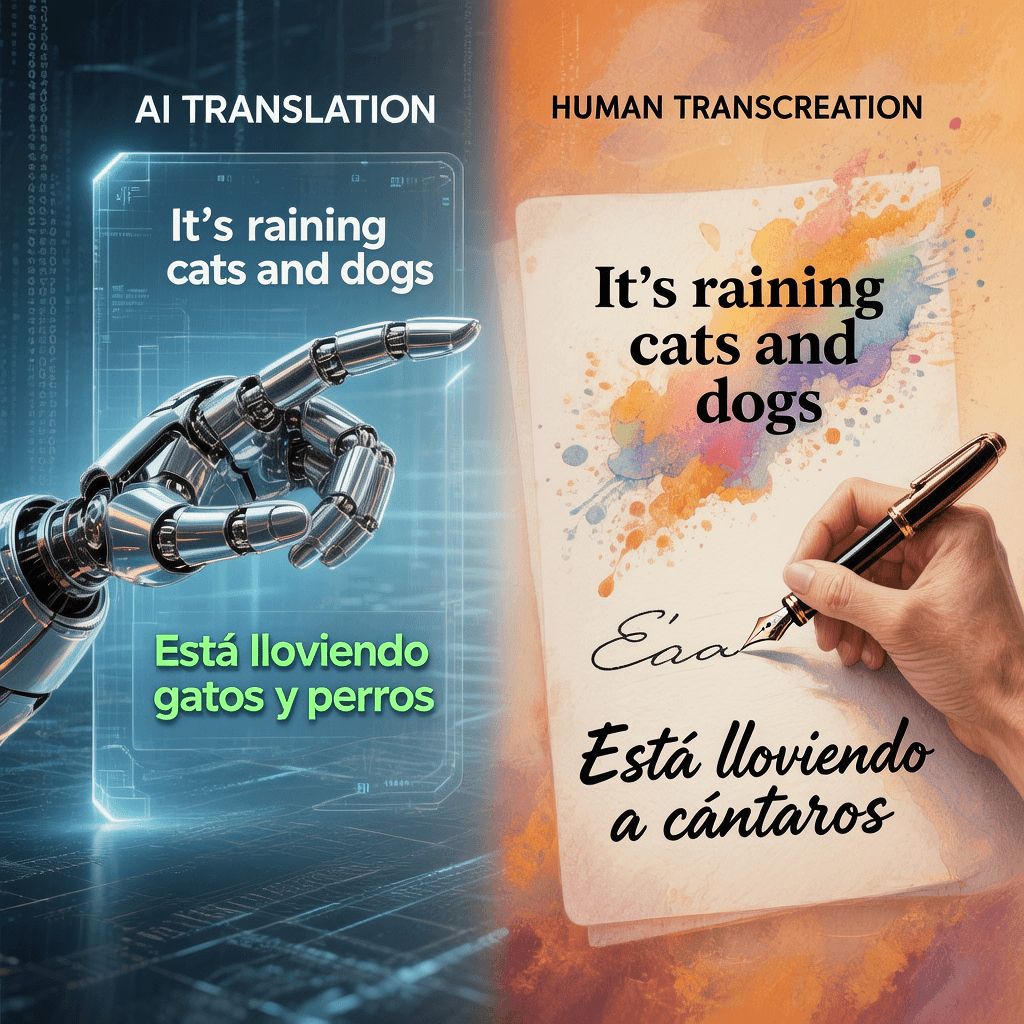
The explosion of AI translation tools like Google Translate, DeepL, and ChatGPT has transformed how businesses approach multilingual content. These tools can translate thousands of words in seconds at minimal cost—a tempting proposition for companies entering Hispanic markets. But when does AI translation deliver acceptable results, and when does it produce the kind of awkward, culturally deaf content that damages brands? The answer lies in understanding the fundamental difference between translation and transcreation, and knowing which content types demand human creativity versus where AI efficiency makes sense. This guide helps you make strategic decisions about when to leverage AI translation and when to invest in professional human transcreation for your bilingual marketing.
1Understanding the Translation-Transcreation Spectrum
Translation and transcreation exist on a spectrum of creative adaptation. Pure translation converts words from one language to another while preserving literal meaning—appropriate for technical documentation, legal contracts, and factual content where accuracy trumps style. Transcreation, by contrast, recreates the entire creative concept in a new language and cultural context, often changing words, imagery, and references significantly to achieve equivalent emotional impact. Between these poles lies localization, which adapts content for regional markets with moderate creative freedom. AI excels at the translation end of this spectrum but struggles with transcreation's creative demands. Understanding where your content falls on this spectrum determines whether AI or human expertise is the right choice.
2Where AI Translation Excels
Modern AI translation has reached impressive accuracy levels for certain content types. Technical documentation, product specifications, help center articles, and straightforward informational content often translate well through AI, especially when source content uses clear, simple language. AI translation works particularly well for high-volume, lower-stakes content where speed and cost efficiency matter more than creative polish. Internal communications, preliminary drafts, user-generated content moderation, and real-time customer service chat translations represent strong AI translation use cases. The key is recognizing that AI translation produces functional equivalence—the Spanish reader understands the information—but rarely achieves stylistic excellence or cultural resonance that builds brand connection.
3Why Marketing Content Demands Human Transcreation
Marketing content aims to persuade, inspire, and create emotional connections—goals that require cultural intelligence AI cannot replicate. Consider a tagline like 'Just Do It'—direct AI translation produces meaningless or awkward Spanish equivalents, while effective transcreation might create an entirely different phrase capturing the same motivational spirit within Hispanic cultural context. Advertising headlines, brand messaging, emotional storytelling, humor, and culturally-specific references all require human transcreation. AI misses nuances like the warmth of familismo in family-oriented messaging, the respect dynamics embedded in Spanish formal/informal address, and the cultural references that create belonging with Hispanic audiences. These elements make the difference between content that's understood and content that's felt.
4The Hybrid Approach: AI-Assisted Human Transcreation
Smart bilingual marketing operations combine AI efficiency with human creativity in hybrid workflows. Use AI translation to create initial drafts quickly, then have native-speaking marketers transcreate those drafts into culturally resonant content. This approach captures AI's speed advantage while ensuring human oversight catches cultural missteps and injects creative adaptation. AI can also assist with terminology consistency, suggesting approved translations from your brand glossary while humans focus on creative elements. Some organizations use AI for A/B testing translation variations before human transcreators refine winning approaches. The key is positioning AI as a productivity tool within human-led creative processes rather than a replacement for cultural expertise.
5Quality Assurance for AI-Translated Content
When using AI translation, robust quality assurance processes are essential. Always have native Spanish speakers review AI-translated content before publication, checking for awkward phrasing, cultural inappropriateness, and terminology accuracy. Develop style guides that define your brand voice in Spanish, creating benchmarks against which to evaluate AI output. Pay particular attention to AI handling of idioms, humor, and culturally-loaded terms—areas where AI frequently produces embarrassing errors. Build feedback loops where human reviewers flag AI mistakes, using these examples to inform decisions about which content types warrant full human transcreation. Never publish customer-facing AI translations without human review, regardless of how confident the AI appears.
6Building Your Bilingual Content Strategy
Develop a content classification system that determines the right approach for each asset type. High-stakes brand content—advertising campaigns, website homepage copy, brand manifestos, and major announcements—should always receive full human transcreation from experienced bilingual marketers. Medium-stakes content like blog posts, social media updates, and email newsletters may use AI-assisted workflows with substantial human editing. Lower-stakes content such as help documentation, product descriptions, and transactional messages can leverage AI translation with human quality review. Budget accordingly, investing heavily in transcreation for brand-critical content while using AI efficiency for volume content. ABE Media helps businesses develop strategic bilingual content frameworks that optimize both quality and efficiency.
Key Takeaway
AI translation has revolutionized multilingual content creation, but it hasn't eliminated the need for human transcreation—it's changed where and how human expertise adds most value. The businesses that succeed in bilingual marketing understand this distinction, leveraging AI efficiency for appropriate content while investing in human creativity where brand impact matters. As AI capabilities continue advancing, the strategic question isn't AI versus human but rather finding the optimal combination for each content type and business context. Make informed decisions based on content stakes, brand impact, and cultural complexity rather than defaulting to either extreme.
Related Topics
Need expert transcreation for your bilingual campaigns?
Let us help you with your bilingual advertising project. Our team of experts is ready to bring your vision to life.