
Bilingual Customer Journey Mapping Guide | ABE Media
Map customer journeys across English and Spanish touchpoints. Learn to identify language moments, optimize bilingual experiences, and eliminate friction.
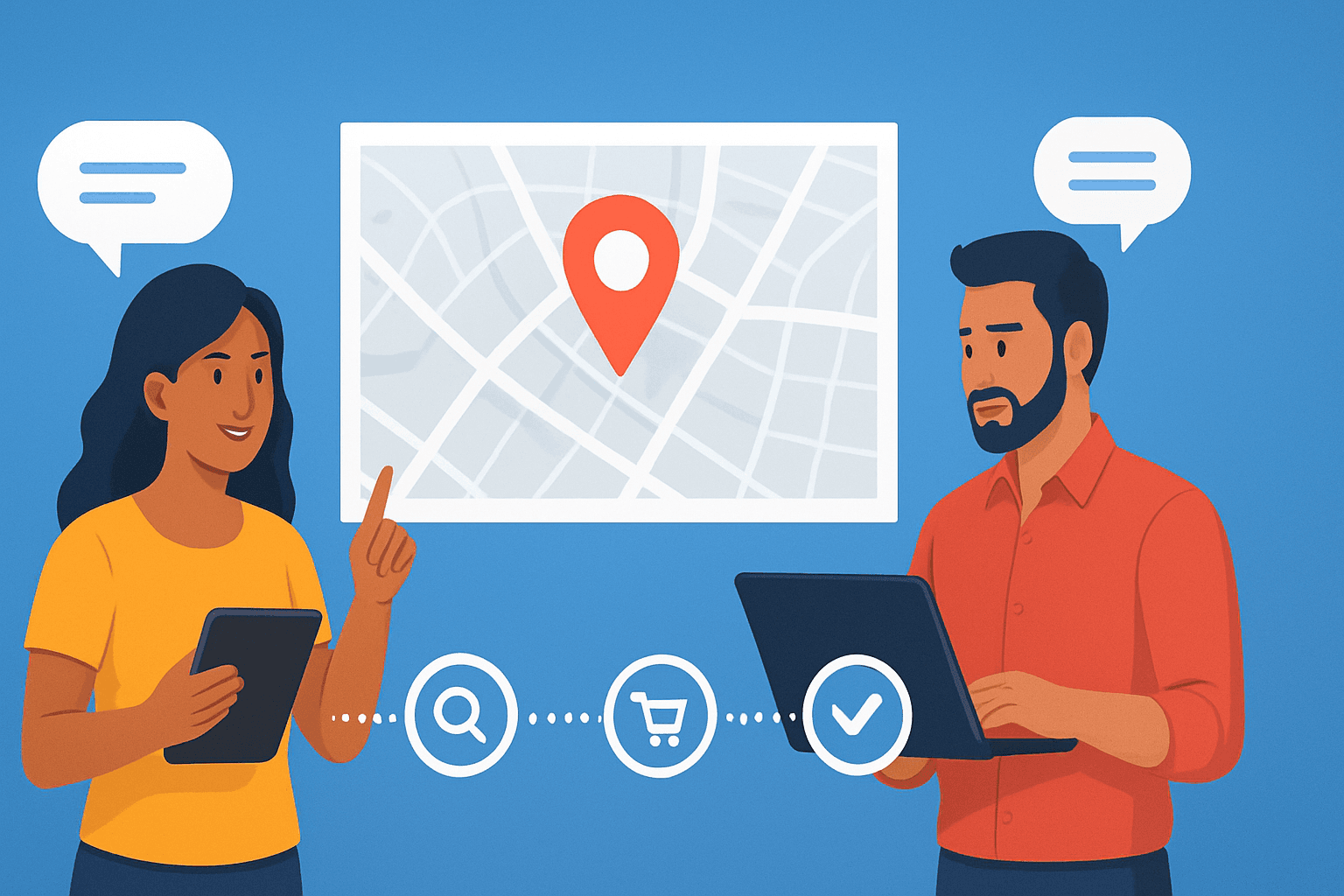
Customer journey mapping has become essential for optimizing experiences, but standard journey maps miss a critical dimension for businesses serving Hispanic markets: the language journey. Bilingual customers don't experience your brand in one language—they encounter English touchpoints, Spanish touchpoints, and transitions between them that can either feel seamless or jarring. A customer might discover your brand through a Spanish social ad, visit your English-dominant website, receive a Spanish email, then call support and encounter English-only agents. Each language moment shapes their experience. This guide shows how to map bilingual customer journeys comprehensively, identify language friction points, and design experiences that serve customers smoothly regardless of how they navigate between languages.
1Understanding Bilingual Journey Patterns
Bilingual customers navigate language fluidly based on context, preference, and availability—not following predictable linear paths. A single customer might search in Spanish, browse in English, ask questions in Spanglish, and complete purchase in English. Some touchpoints trigger language preference: family-related purchases often pull toward Spanish, while professional or technical purchases may pull toward English. Understanding these patterns requires studying actual Hispanic customer behavior, not assuming rational language consistency. Interview bilingual customers about their language choices at different journey stages. Analyze language signals in your data: website language toggles, email engagement by language, support request language, and social media interaction language. This research reveals how your specific customers navigate language throughout their journey.
2Mapping Language at Every Touchpoint
Create journey maps that explicitly document language availability and quality at every touchpoint. For each interaction point, answer: Is Spanish available? Is it equivalent quality to English? Is language preference carried forward from previous touchpoints? Does language switching require explicit user action? Map the language of all channels: website, app, email, social media, advertising, support phone, chat, in-store, and physical materials. Identify touchpoints where Spanish is unavailable, creating forced language transitions that may frustrate Spanish-preferring customers. Document touchpoints where Spanish is available but lower quality—perhaps translated rather than transcreated content, or Spanish support with longer wait times. Visualize these language realities on your journey map to make gaps visible.
3Identifying Language Friction Points
Language friction occurs when customers experience jarring transitions between languages or find their preferred language unavailable at critical moments. Common friction points include: advertising in Spanish that leads to English-only landing pages; email in Spanish with English customer service when they reply; Spanish product descriptions but English-only checkout; phone IVR offering Spanish but transferring to English-only agents. These frictions damage trust and reduce conversion. Particularly problematic are friction points at high-stakes moments—purchase completion, problem resolution, sensitive communications. Quantify friction by tracking abandonment rates, satisfaction scores, and conversion rates at language transition points. Survey customers specifically about language experience to identify friction you can't see in behavioral data.
4Designing Bilingual Journey Optimization
With friction points identified, design targeted improvements. Prioritize fixes at high-impact moments: ensuring Spanish availability through the complete purchase journey, matching advertising language to landing pages, and providing equivalent support quality in both languages. Consider implementing language preference persistence so customers who indicate Spanish preference experience Spanish at subsequent touchpoints automatically. Design graceful degradation for touchpoints where full Spanish isn't available—acknowledge the limitation and offer alternatives rather than silently dropping into English. Create internal language routing that directs Spanish-preferring customers to bilingual staff. Set experience quality standards that apply equally to both languages, preventing Spanish from becoming a second-class experience.
5Technology Enablement for Bilingual Journeys
Implement technology that enables smooth bilingual journeys. Your CRM should capture and surface language preference so every customer-facing system knows how to serve each customer. Marketing automation platforms should trigger language-appropriate communications based on stored preference and behavioral signals. Website personalization should remember language selection across sessions and devices. Support routing should match language preference to agent capabilities. Customer data platforms should unify language signals from multiple sources to build accurate preference profiles. ABE Media helps businesses implement technology infrastructure that enables seamless bilingual customer experiences from first touch through ongoing relationship.
6Measuring Bilingual Journey Success
Track journey performance separately by language to ensure Spanish-speaking customers receive equivalent experiences. Compare key metrics at each stage: awareness conversion, consideration engagement, purchase completion, and retention rates. Significant gaps between English and Spanish performance indicate experience quality problems. Monitor customer satisfaction and Net Promoter Score by language preference—if Spanish-preferring customers report lower satisfaction, investigate why. Track language friction metrics: how often customers switch languages during sessions, abandonment rates at language transition points, and support escalations involving language issues. Use journey analytics to identify where Spanish-speaking customers drop off at higher rates than English-speaking customers, then investigate root causes.
Key Takeaway
Bilingual customer journey mapping reveals experience gaps invisible in traditional journey analysis. By explicitly documenting language availability, quality, and transitions, businesses can identify and eliminate friction that drives Hispanic customers away. The goal is an experience where language preference never creates barriers—customers move through their journey in whichever language they prefer, with seamless transitions when they switch. This requires systematic analysis, targeted improvement, and ongoing measurement to ensure bilingual experience parity. Invest in understanding your Hispanic customers' language journey to build experiences that serve them as well as you serve English-speaking customers.
Related Topics
Want to optimize your bilingual customer experience?
Let us help you with your bilingual advertising project. Our team of experts is ready to bring your vision to life.