
Spanish Chatbot Training: NLU Best Practices | ABE Media
Train chatbots for Spanish language understanding. Learn NLU training, intent recognition, and conversation design for Spanish-speaking users.
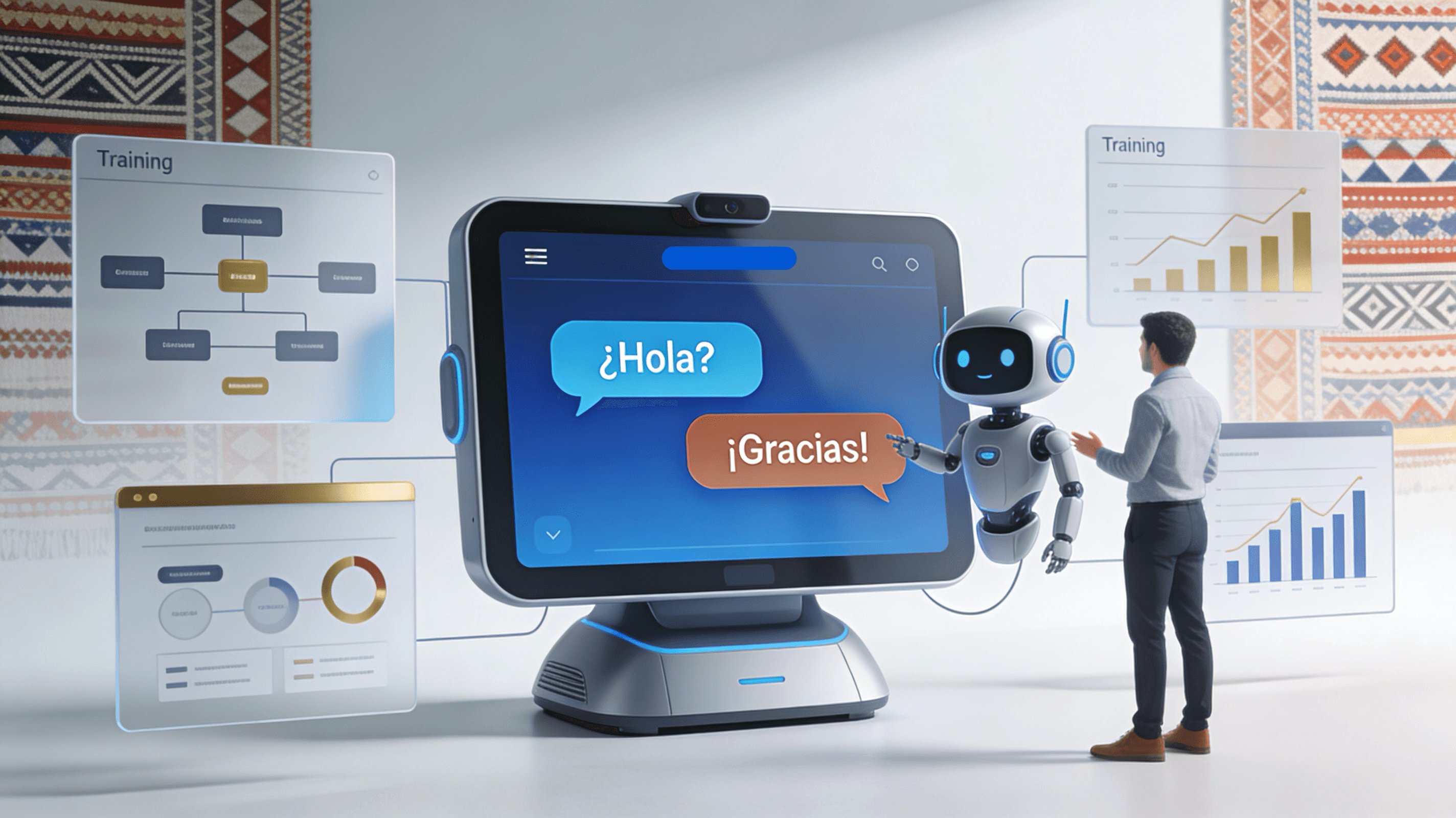
Building a chatbot that truly understands Spanish requires more than translating your English training data. Spanish natural language understanding (NLU) involves distinct grammatical structures, regional vocabulary variations, and user expression patterns that differ fundamentally from English. A chatbot trained on translated data will struggle with real Spanish user inputs, leading to frustrating misunderstandings and failed interactions. This guide covers best practices for training Spanish-language chatbots, from building native training datasets to handling the linguistic complexity that makes Spanish NLU challenging but achievable with the right approach.
1Why Translated Training Data Fails
The most common mistake in Spanish chatbot development is translating English training examples to create Spanish training data. This approach fails because Spanish speakers express the same intents differently than English speakers. The phrase structures, vocabulary choices, and even which intents users commonly express vary between languages. A translated dataset teaches your chatbot to understand Spanish sentences that sound like translated English—not how real Spanish speakers actually communicate. Additionally, translation often preserves English idioms and expressions that don't exist in Spanish, creating training examples that no real user would ever type. Native Spanish training data, collected from or created by Spanish speakers, produces dramatically better NLU performance.
2Building Native Spanish Training Datasets
Create Spanish training data from scratch with native Spanish speakers rather than translating English examples. Start by defining intents based on how Spanish speakers actually express needs—work with native speakers to identify common phrasings for each intent. Collect real Spanish conversation examples through user research, support logs, or pilot testing with Spanish speakers. Include variations in formality (tú vs. usted), regional vocabulary differences, and common misspellings or informal expressions. Aim for at least as many training examples per intent in Spanish as in English—Spanish often needs more examples due to greater conjugation variation. Have native speakers review all training data for naturalness and coverage of realistic user expressions.
3Handling Regional Spanish Variations
Spanish varies significantly across regions, creating NLU challenges for chatbots serving diverse Hispanic audiences. Mexican Spanish, Caribbean Spanish, Central American Spanish, and US Hispanic Spanish each have distinct vocabulary and expressions. The word for 'computer' might be computadora, ordenador, or computador depending on the user's background. Train your chatbot on vocabulary from the regions your users represent—for US Hispanic audiences, this typically means Mexican-influenced Spanish with some Caribbean and Central American vocabulary. Include Spanglish expressions common among US bilingual speakers. Consider implementing entity recognition that handles multiple regional terms for the same concept, mapping various words to a single understood entity.
4Spanish Entity Recognition
Entity extraction in Spanish requires handling linguistic features not present in English. Spanish names often include two surnames (paternal and maternal), requiring entity recognition that captures complete Hispanic names correctly. Address formats differ across Spanish-speaking countries and from US formats. Date expressions vary—train on both US date formats common among US Hispanics and traditional Spanish formats. Number expressions, currency formats, and phone number patterns all need Spanish-specific training. Build entity training data that reflects how your Spanish-speaking users actually provide this information, not how English speakers would express it. Test entity extraction extensively with native Spanish speakers providing natural inputs.
5Conversation Flow Design for Spanish
Spanish conversation design should reflect cultural communication preferences, not just translate English conversation flows. Spanish interactions often include more greetings, pleasantries, and relationship acknowledgment—design bot responses that feel culturally appropriate rather than abruptly transactional. Consider formality levels: should your bot use tú (informal) or usted (formal)? This depends on your brand voice and audience preferences. Spanish responses naturally run longer than English equivalents—don't artificially truncate them to match English response length. Design error handling and fallback messages that sound natural in Spanish. Test conversation flows with native Spanish speakers to identify moments that feel awkward or culturally inappropriate.
6Testing and Continuous Improvement
Spanish chatbot testing requires native speaker involvement throughout development. Conduct user testing with Spanish speakers from your target demographics, observing where the bot fails to understand or responds inappropriately. Analyze conversation logs to identify common Spanish inputs that trigger fallback responses—these represent NLU training gaps. Monitor intent confidence scores for Spanish conversations compared to English to identify where Spanish understanding lags. Build feedback loops where native speakers regularly review and correct bot performance, using errors to improve training data. ABE Media helps businesses develop and train Spanish chatbots that truly understand Hispanic users through native training data and culturally-appropriate conversation design.
Key Takeaway
Training chatbots for Spanish requires commitment to native language development rather than translation shortcuts. The investment in proper Spanish NLU training pays off through chatbots that actually understand and help Spanish-speaking users rather than frustrating them with constant misunderstandings. Build native training datasets, handle regional variations, design culturally-appropriate conversations, and test extensively with native speakers to create Spanish chatbot experiences that serve Hispanic customers effectively.
Related Topics
Need help training your Spanish chatbot?
Let us help you with your chatbot development project. Our team of experts is ready to bring your vision to life.