
Top 5 Use Cases for AI Chatbots in Small Business
Discover the most impactful ways small businesses use AI chatbots to automate customer service, capture leads, and boost sales. Real examples and ROI insights.
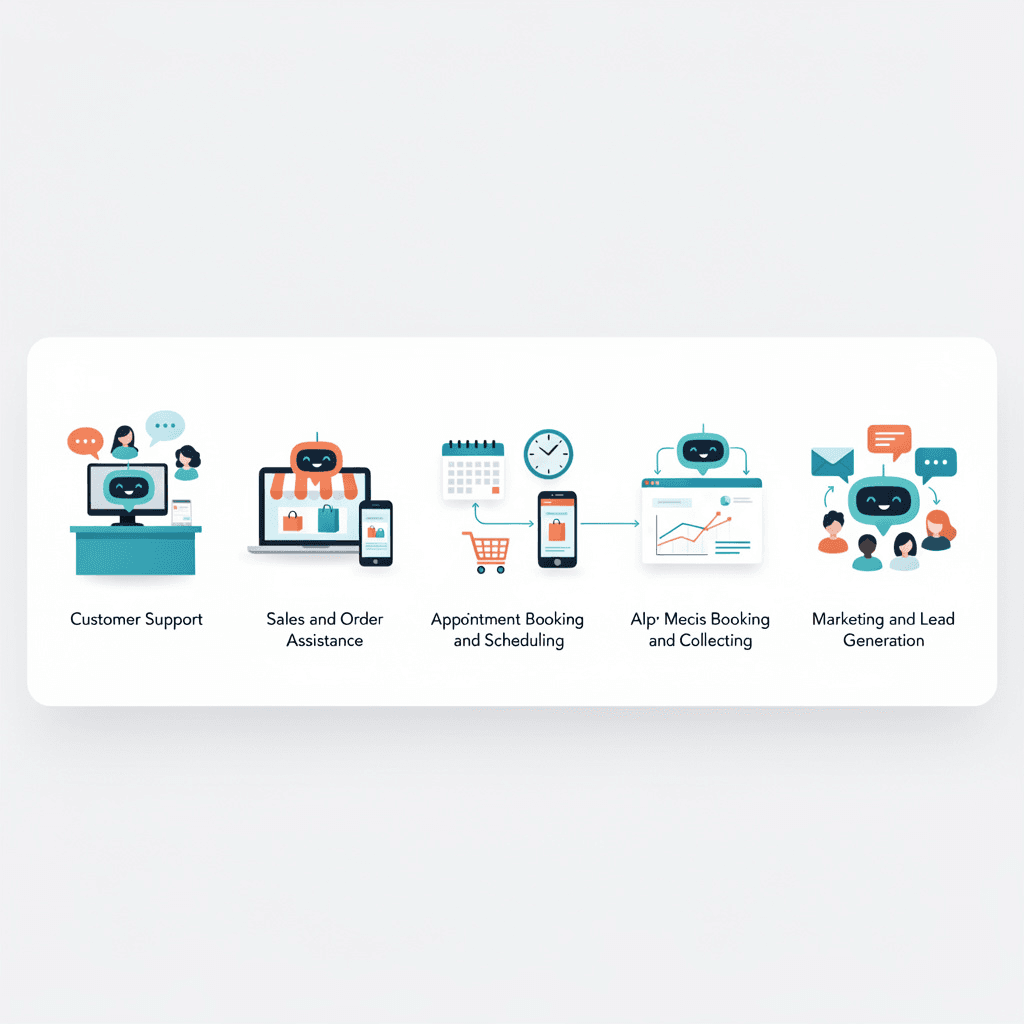
AI chatbots have evolved from simple FAQ bots to sophisticated business tools that can transform small business operations. Today's chatbots understand context, speak multiple languages, integrate with business systems, and handle complex conversations that previously required human agents. For small businesses with limited staff, chatbots provide scalable customer service without scaling headcount. But not all chatbot applications deliver equal value. This guide explores the five most impactful use cases for AI chatbots in small business, showing where chatbots deliver real ROI and how to implement them effectively.
124/7 Customer Support Without 24/7 Staff
The most fundamental chatbot use case solves a universal small business challenge: customers have questions at all hours, but small businesses can't afford round-the-clock staff. AI chatbots provide instant responses to common questions—business hours, pricing, service details, policies—any time of day or night. Beyond basic FAQs, modern chatbots handle nuanced conversations, understand context from previous messages, and know when to escalate to human agents. For businesses serving customers in different time zones or industries where after-hours inquiries are common (real estate, healthcare, hospitality), chatbot-powered 24/7 support captures opportunities that would otherwise be lost to competitors who respond faster.
2Lead Qualification and Capture
Every website visitor represents potential business, but not every visitor is ready to buy or worth pursuing. AI chatbots qualify leads through natural conversation, gathering information about needs, budget, timeline, and decision-making authority. Unlike static forms that visitors often abandon, conversational lead capture feels helpful rather than demanding. Chatbots can tailor questions based on responses, going deeper with promising prospects while politely ending conversations with poor-fit leads. Captured information syncs directly to CRMs, eliminating data entry. For service businesses like lawyers, consultants, and contractors, chatbot lead qualification ensures human follow-up focuses on qualified prospects rather than tire-kickers.
3Appointment Scheduling and Booking
Appointment-based businesses—salons, clinics, consultants, contractors—spend significant time on scheduling. AI chatbots integrate with calendaring systems to show real-time availability, book appointments, send confirmations, and handle rescheduling—all through natural conversation. Customers can book at 11 PM without waiting for business hours. Chatbots reduce no-shows by sending reminders and making rescheduling easy. They can also gather pre-appointment information, ensuring appointments are productive. For businesses where appointments drive revenue, chatbot scheduling removes friction from the booking process and frees staff from phone tag and email threads about availability.
4Product Recommendations and Sales Support
E-commerce and retail businesses use chatbots as virtual sales assistants. Through conversation about needs, preferences, and constraints, chatbots recommend relevant products from your catalog. Unlike basic search or filtering, conversational recommendations feel personalized—like talking to a knowledgeable salesperson. Chatbots answer product questions, compare options, explain features, and address objections that might otherwise prevent purchases. They can suggest complementary products, offer available promotions, and guide customers through checkout. For businesses with complex or configurable products, chatbot sales support helps customers navigate options they might otherwise find overwhelming.
5Bilingual Customer Engagement
For businesses serving multilingual communities, bilingual chatbots provide equal service quality in multiple languages. A Spanish-speaking customer receives the same instant, helpful response as an English-speaking customer—without requiring bilingual staff availability. Modern AI chatbots handle language detection automatically, switching seamlessly between languages mid-conversation if needed. This capability is transformative for businesses in areas with large Hispanic populations, enabling them to serve Spanish-speaking customers professionally without hiring dedicated bilingual staff. Bilingual chatbots demonstrate respect for customers' language preferences while expanding your accessible market.
Key Takeaway
AI chatbots deliver the most value when deployed for specific, high-impact use cases rather than as generic 'virtual assistants.' The five use cases covered—24/7 support, lead qualification, appointment scheduling, sales support, and bilingual engagement—represent proven applications where chatbots provide clear ROI for small businesses. Success requires choosing the right use case for your business, training your chatbot with accurate information, integrating with your existing systems, and continuously improving based on conversation data. For small businesses ready to automate repetitive interactions while improving customer experience, AI chatbots offer a competitive advantage that was previously available only to larger organizations.
Related Topics
Continue Reading
Measuring the ROI of a Custom Bilingual Chatbot for Your Business
Learn how to calculate and track the return on investment from your bilingual AI chatbot. Metrics, benchmarks, and real business impact analysis.
AI MarketingAI Chatbot vs Live Chat: Which Is Better for Small Business?
Compare AI chatbots and live chat for small business customer service. Understand costs, capabilities, and when to use each approach for best results.
Ready to implement an AI chatbot for your business?
Let us help you with your chatbot development project. Our team of experts is ready to bring your vision to life.