
Why Your Small Business Needs a Headless CMS in 2026
Learn how headless CMS architecture benefits small businesses with faster websites, better SEO, and omnichannel content delivery. A complete guide.
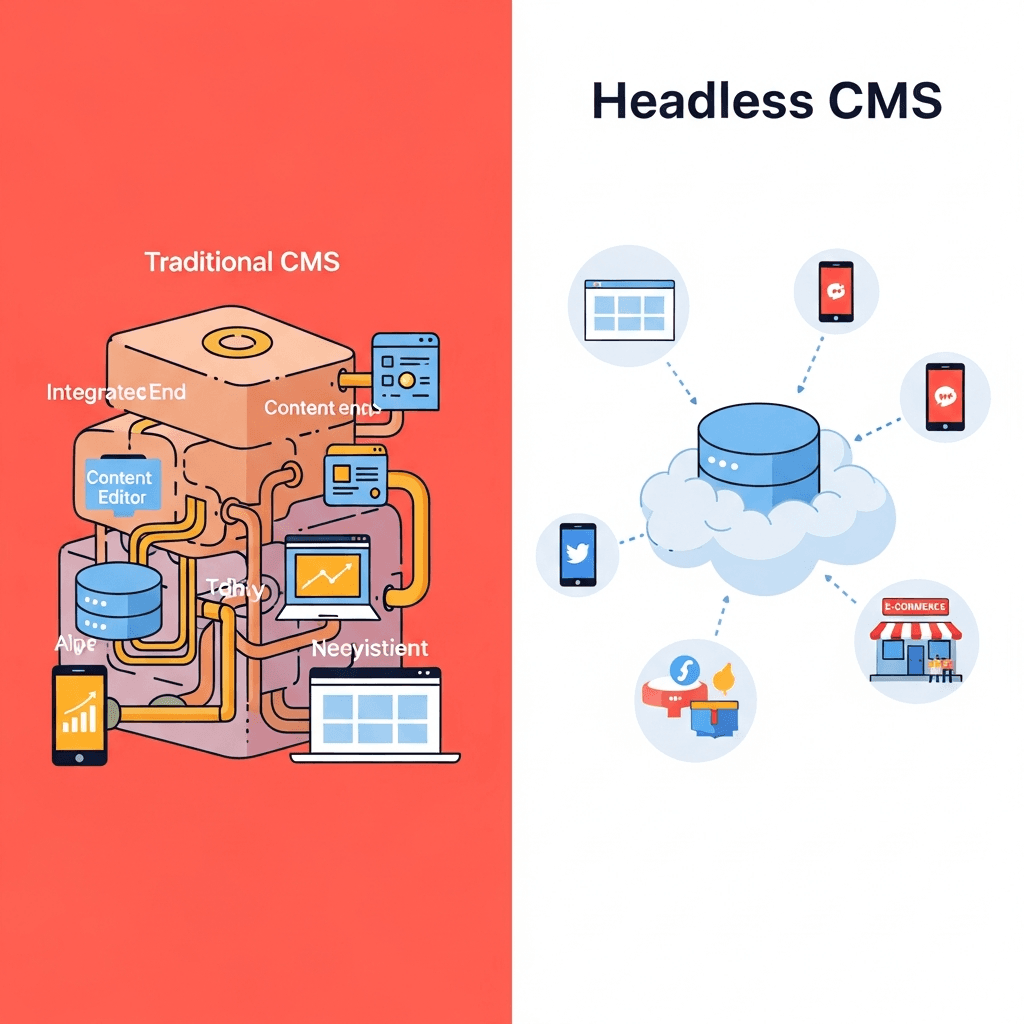
Traditional content management systems like WordPress bundle content management with content presentation. You create content in WordPress, and WordPress displays it on your website. Headless CMS takes a different approach: it manages your content but delivers it via APIs to any frontend—your website, mobile app, digital signage, or anything else. For small businesses, this architecture might seem like overkill. But headless CMS offers surprising benefits even for simple websites: better performance, improved security, easier multi-channel publishing, and future flexibility. This guide explains what headless CMS means for small businesses and when this modern architecture makes sense.
1What Makes a CMS 'Headless'?
In a traditional CMS, the 'head'—the frontend that visitors see—is tightly coupled to the 'body'—the backend that manages content. WordPress, Squarespace, and Wix all work this way. You're locked into their rendering system. A headless CMS removes this coupling. Content is created and stored in the CMS but accessed through APIs that any frontend can consume. Your website (built with any technology you choose) fetches content from the CMS and displays it. The same content can simultaneously feed your mobile app, email newsletters, or any other channel. This separation provides flexibility and opens architectural possibilities impossible with traditional CMS platforms.
2Performance Benefits for Small Business Websites
Headless architecture enables static site generation and edge deployment. Your website is built ahead of time into optimized HTML files served from global CDN networks. No database queries per request, no server-side rendering delays, no plugin overhead. Pages load in milliseconds from locations close to your visitors. This performance difference is measurable: headless sites routinely achieve Lighthouse scores of 95-100, while traditional CMS sites often struggle to break 70. For small businesses competing on SEO, this performance advantage translates directly to better rankings and improved user experience.
3Security Advantages of Headless Architecture
Traditional CMS platforms are frequent targets for hackers because they run server-side code, connect to databases, and have widely-known vulnerabilities. WordPress sites require constant security updates, plugins, and monitoring. Headless sites can be deployed as static files with no server-side code, database connections, or admin interfaces for attackers to exploit. The attack surface shrinks dramatically. Your content lives securely in the headless CMS provider's infrastructure, benefiting from their enterprise-grade security. For small businesses without dedicated security staff, headless architecture provides peace of mind that traditional CMS platforms can't match.
4Content Flexibility Across Channels
Today your content might only live on your website. But what about tomorrow? A headless CMS stores content in a structured, reusable format that can power any channel. Want to launch a mobile app? Your content is already accessible via API. Need to display content on an in-store kiosk? Same content, different presentation. Building a voice assistant experience? The headless CMS can serve that too. This omnichannel capability matters even for small businesses: bilingual websites, email newsletters pulling latest content, social media automation, and marketing integrations all benefit from centralized, API-accessible content.
5Popular Headless CMS Options for Small Businesses
The headless CMS market includes options for every budget and technical level. Sanity offers a flexible, developer-friendly approach with a generous free tier perfect for small businesses. Contentful provides enterprise features with pricing that scales. Strapi is open-source, giving full control for technically inclined teams. Prismic combines ease of use with powerful content modeling. Each platform offers visual editing interfaces that non-technical users can learn quickly—you don't need to be a developer to update content in a headless CMS. The right choice depends on your budget, technical resources, and specific content needs.
6Is Headless Right for Your Small Business?
Headless CMS isn't for everyone. If you need to launch a simple website tomorrow with minimal budget and plan to manage it entirely yourself, traditional CMS or website builders remain valid options. But headless makes sense when: performance and SEO are competitive differentiators, you want better security without constant maintenance, you're building a custom website anyway (with React, Next.js, or similar), you anticipate multichannel content needs, or you want to avoid platform lock-in. Many small businesses start with traditional CMS and migrate to headless as they grow—understanding headless now prepares you for that evolution.
Key Takeaway
Headless CMS represents a modern approach to content management that separates what you say from how you say it. For small businesses, this architecture delivers better performance, improved security, and flexibility for future growth. While headless requires more upfront development than traditional CMS platforms, the long-term benefits often justify the investment—especially for businesses where website performance directly impacts revenue. As you plan your next website project or consider modernizing your current site, evaluate whether headless CMS architecture aligns with your goals. The future of the web is increasingly headless, and small businesses can benefit from adopting this approach today.
Related Topics
Continue Reading
Next.js vs WordPress for Small Business Websites: Which Should You Choose?
Compare Next.js and WordPress for small business websites. Understand performance, cost, maintenance, and scalability differences to make the right choice.
DesignMobile-First Design for Small Business: A Complete Guide
Learn why mobile-first design matters for small businesses and how to implement it. Improve user experience, SEO rankings, and conversions on mobile devices.
Ready to modernize your website with headless CMS?
Let us help you with your web development project. Our team of experts is ready to bring your vision to life.